Essential Tailoring Tools Every Beginner Should Have
You do not need a fully equipped workroom to make well-fitting clothes. You need a small number of tools that do their job properly, and the judgement to know which purchases can wait.
Measuring tools
The tape is the most important tool in the kit and the one most often bought badly. A cheap tape stretches, and a tape that has stretched quietly ruins every measurement you take from it.
- Soft measuring tape, 150 cm. Dual scale, with a metal end. Check it against a rigid rule once a year.
- A rigid metre rule or quilter’s rule. For checking grainlines and drawing long straight lines on paper.
- A small transparent ruler. For seam allowances and buttonhole spacing.
Measuring tools worth owning
Tapes and rules that decide whether a garment fits at all.
Measuring tools
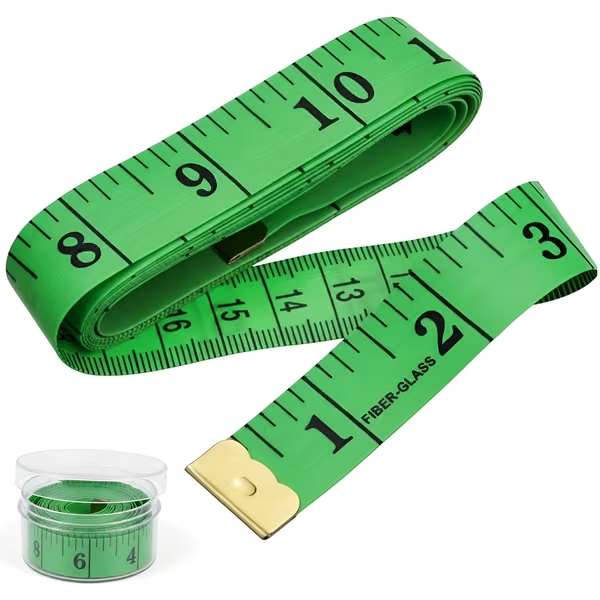
Soft measuring tape, 150 cm (opens on Amazon in a new tab)
A flexible dual-scale tape that follows body curves, not straight lines.
- Centimetres on one side, inches on the other
- Flexible enough for bust, waist and hip
Best for: Taking body and dress form measurements accurately.
Check price for Soft measuring tape, 150 cm (opens in a new tab)Cutting tools
Cutting is where a bad tool shows up immediately. Blunt shears chew the fabric edge, which distorts the seam allowance and makes accurate stitching harder.
- Tailor’s shears, 9 to 10 inch, bent handle. The workhorse. Fabric only.
- Small sharp scissors. For trimming threads and clipping curves.
- A rotary cutter and mat (optional). Excellent for straight cuts and slippery fabric, but not necessary to begin.
Keep paper scissors separate. Cutting paper dulls fabric blades faster than anything else in the room.
Cutting tools worth owning
Shears and scissors kept exclusively for fabric.
Cutting tools
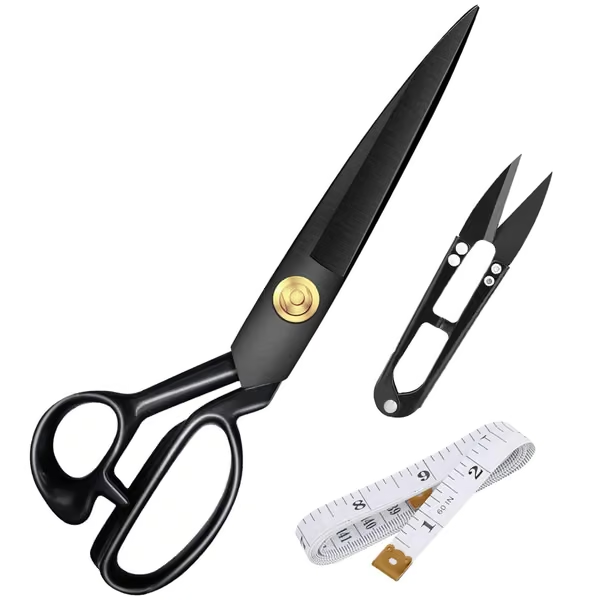
9-inch tailoring scissors with thread snips (opens on Amazon in a new tab)
Stainless steel shears for cloth, bundled with snips and a tape.
- Long blades cut clean, straight lines
- Thread snipper handles the small trims
Best for: Cutting out garments, then tidying seams as you sew.
Check price for 9-inch tailoring scissors with thread snips (opens in a new tab)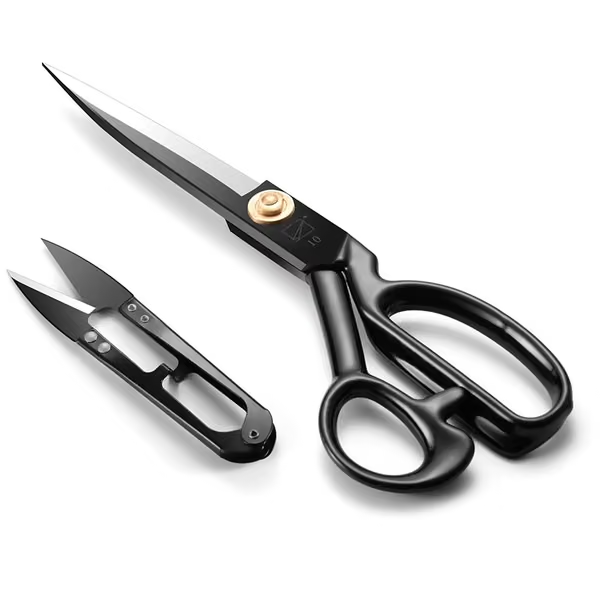
Cutting tools
10-inch fabric shears, high-carbon steel (opens on Amazon in a new tab)
A heavier pair for dressmaking, leather and alterations. Right-handed.
- High-carbon steel holds an edge
- Extra length powers through thick fabric
Best for: Heavy fabrics, leather and long straight cuts.
Check price for 10-inch fabric shears, high-carbon steel (opens in a new tab)Marking tools
Every construction decision is transferred to the fabric with a mark. If the mark is inaccurate or disappears too early, the garment inherits the error.
- Tailor’s chalk in at least two colours, for light and dark fabric.
- Fine pins that do not leave permanent holes in delicate cloth.
- A marking pencil or washable marker for fine lines on cotton.
- Tracing wheel and carbon paper for transferring a pattern to fabric, if you work with wool or heavy cotton.
Stitching tools
- Hand needles in a range of sizes.
- Thread that matches the fabric weight, not just the colour.
- A seam ripper. You will use it more than you expect.
- A pin cushion that keeps pins within reach while you work.
- A thimble, if you hand-sew anything heavy.
Pressing tools
Pressing is the difference between homemade and professional, and it is the stage beginners skip. A domestic iron with steam plus a pressing cloth and a seam roll covers most needs.
- Iron with steam. Essential.
- Pressing cloth. Protects the fabric face from shine.
- Seam roll or a rolled towel. Presses curves without flattening them.
- Tailor’s ham (optional). Useful for bust and hip shaping.
Pattern-making tools
- Pattern paper. Dot-and-cross paper keeps grainlines honest.
- A set square and a French curve. For armholes, necklines and hip curves.
- Weights or pins to hold paper still while tracing.
A realistic priority order
| Priority | Tools | Why now |
|---|---|---|
| Buy first | Measuring tape, fabric shears, chalk, pins, hand needles, thread | Without these you cannot measure, cut or mark accurately |
| Buy soon | Seam ripper, pin cushion, iron with steam, small scissors | They remove friction and fix mistakes cleanly |
| Buy when needed | Pattern paper, French curve, tracing wheel, rotary cutter | Needed once you draft or trace patterns |
| Postpone | Overlocker, dress form, tailor’s ham, industrial machine | Useful, but not blocking for a first garment |
Buying notes that save money
- Buy one good pair of shears instead of three cheap pairs.
- Check that a tape has both centimetres and inches, and that zero starts at the metal end.
- Avoid kits that pad the box with items you will never use; buy the tools you need individually.
- For a dress form, measurement accuracy matters more than extra features — see the buying checklist.
Next steps
If you are starting from zero, read how to start fashion designing at home, and keep the recommended tools list handy when you shop.
Frequently asked questions
What should I buy first if I have a very small budget?
A soft measuring tape, fabric shears and tailor’s chalk. Those three make the difference between a garment that fits and one that does not; everything else can be added as you need it.
Can I use household scissors for fabric?
You can, but the cut will be ragged and the blades will dull quickly. Fabric shears stay sharp because they are only used on cloth. A dedicated pair is one of the best-value purchases in sewing.
Do I need a dress form to start?
Not to start sewing, but yes to learn draping or to fit garments for other people. A basic half form is enough to make a real difference to how quickly you spot fit problems.
Is an overlocker necessary?
No. Most beginners can finish seams with a zigzag stitch, French seams or pinking shears. An overlocker is a time-saver, not a requirement.