Tailoring & garment construction
How Tailors Use Dress Forms to Create Better-Fitting Clothes
A dress form is not a substitute for a tailor. It is a fixture that makes the tailor's decisions visible. What follows is the working sequence: how a garment actually gets built and corrected on a form, and where the common failure points are.
Setting up the form for the client
Before a single pin goes in, match the form to the person. Measure the form, compare it to the client's measurements, and pad the difference — a padded bra for bust, wadding at the hip, shoulder pads where the client carries width. Note what you padded, because the form is now a record of that client.
Set the stand so the waist sits at your working height. A form that is too low makes you hunch; too high and you lose control of the pin angle.
Basting before fitting
Most first fittings fail because the garment was never basted. Machine stitching a seam you have not checked in three dimensions turns a two-minute correction into an hour of unpicking.
Baste the side seams, shoulder seams and any darts with a long running stitch. Slip the garment onto the form, pin the closure, and step back. You are checking balance first: does the side seam hang vertically, is the hem level, does the shoulder sit where the client's shoulder sits.
Pinning technique
Pin along the seam line, roughly every 3 to 5 cm, with the pin parallel to the fabric surface. Pins pushed straight down into the form lift the cloth; pins placed at an angle drag it sideways. Both show up later as diagonal wrinkles that no amount of pressing fixes.
Use fine pins on lightweight fabric and place them inside the seam allowance where possible, so you are not marking the visible face.
Draping as part of fitting
Strictly, draping is shaping fabric on the form to develop a design. In a tailoring context the same motion is used to solve a fit problem: pin a fold, see how it behaves, transfer the change back to the pattern. The draping guide covers the design-led version; the mechanics are identical.
Adjusting the garment, not the person
When a garment does not hang cleanly, the instinct is to add a dart or take in a seam. That is often the wrong correction. Before cutting, identify what the fabric is doing:
- Horizontal pulls across the bust: not enough room, usually at the side seam or dart intake.
- Vertical folds from the shoulder: the shoulder is too wide or the front is too long.
- Diagonal drag from underarm to waist: the armhole or bust dart is pulling.
- Gaping at the back neck: the back neckline is too wide, not too short.
Each of these maps to a specific pattern correction. The fitting problems guide has the full diagnosis table.
Working with different fabrics
The form does not change, but the fabric does:
| Fabric | Behaviour on the form | Practical adjustment |
|---|---|---|
| Crisp cotton | Holds shape, shows every pin mark | Pin inside seam allowances, press as you go |
| Silk and satin | Slips, shows pin holes | Use fine pins, tissue paper under seams |
| Wool | Forgiving, can be shaped with steam | Steam the form to shrink out fullness |
| Knit | Stretches under its own weight | Let it hang overnight before marking hems |
| Lining | Behaves differently from the shell | Fit the lining separately, then reconcile |
The iterative loop
Fitting on a form is a loop, not an event. A typical cycle:
- Baste and pin the garment on the form.
- Mark corrections in chalk, with arrows showing direction.
- Take the garment off, transfer marks to the paper pattern.
- Re-cut or re-stitch the affected pieces.
- Return to the form and check the correction did not create a new problem.
Two or three loops is normal for a fitted garment. If you are on the sixth, the original pattern is probably the problem, not the fit.
Common mistakes
- Fitting to the form without checking it against the client's measurements.
- Correcting the same problem at three seams instead of fixing the pattern.
- Marking hems on a garment that has not hung long enough — knits and bias cuts drop.
- Pressing on the form while the garment is still pinned, which sets the pin distortion into the cloth.
- Assuming a good fit on the form means a good fit in movement.
Sewing and stitching worth owning
The everyday kit: needles, thread, rippers and machines.
Sewing and stitching
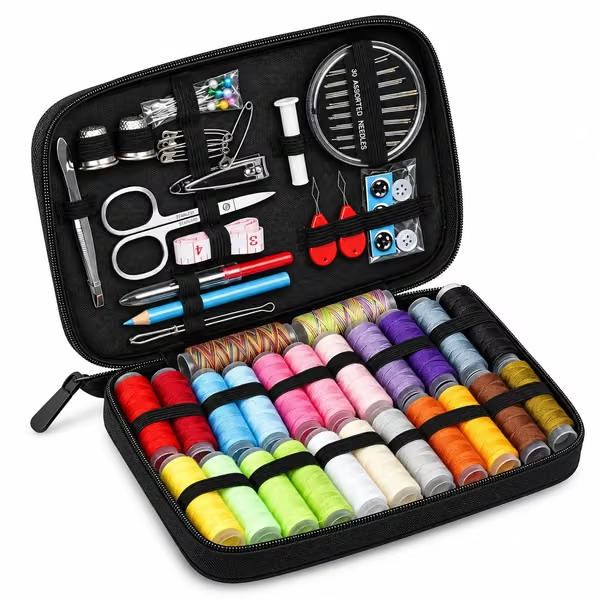
98-piece sewing kit with storage bag (opens on Amazon in a new tab)
Needles, thread, scissors and odds and ends in one zip case.
- One purchase covers hand-sewing basics
- Packs flat for travel or a drawer
Best for: Hand finishing, basting and quick repairs.
Check price for 98-piece sewing kit with storage bag (opens in a new tab)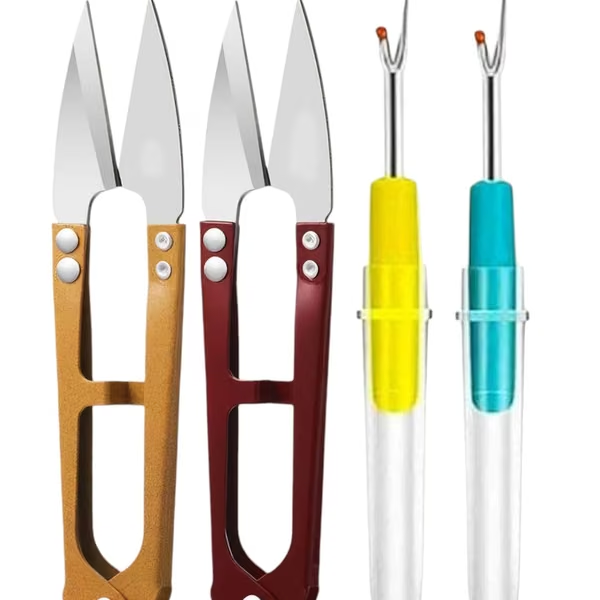
Sewing and stitching
Seam ripper and thread snip set, 4 pieces (opens on Amazon in a new tab)
Two rippers and two thread scissors for undoing stitches without tears.
- Different sizes for seams and buttonholes
- Cheap enough to keep in every kit
Best for: Fixing mistakes, opening buttonholes and removing old stitching.
Check price for Seam ripper and thread snip set, 4 pieces (opens in a new tab)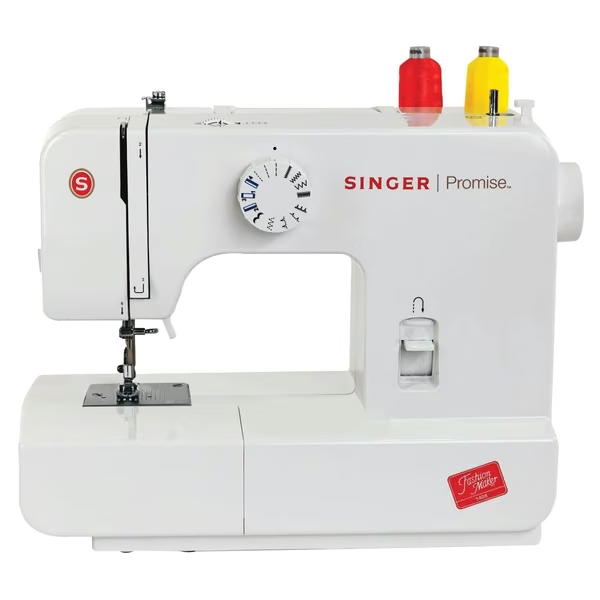
Sewing and stitching
SINGER 1408 sewing machine, 8 built-in stitches (opens on Amazon in a new tab)
A metal-framed machine with 21 stitch functions and a free arm.
- 800 stitches per minute for everyday seams
- 4-step buttonhole and snap-on presser foot
Best for: A first machine for dressmaking, alterations and home sewing.
Check price for SINGER 1408 sewing machine, 8 built-in stitches (opens in a new tab)Next steps
If corrections keep reappearing, work through garment fitting problems. If the form itself may be the issue, re-check it with our measurement guide.
Frequently asked questions
Do professional tailors fit on a dress form or on the client?
Both, in sequence. Most construction and correction happens on the form, and the live fitting confirms what the form could not tell you: posture, movement, comfort and the client’s own preferences.
How do you pin fabric to a dress form without distorting it?
Pin parallel to the surface, not down into it, and use fine pins placed every few centimetres along the seam line. Pinning at an angle and dragging the fabric is what causes the diagonal pull you see in the finished garment.
Can you baste a garment on the form?
Yes, and it is one of the most useful habits in a workroom. Hand basting on the form lets you check balance before committing to machine stitching.