Tailoring & garment construction
Basic Hand Stitches Every Beginner Should Know
A sewing machine is fast, but it cannot do everything. Hems, linings, buttons, delicate fabrics and tight corners are all better done by hand. These six stitches cover almost everything a beginner will need.
Before you stitch
Good hand sewing is about preparation more than skill. A few habits make the difference between tidy stitches and a mess.
- Thread length: no longer than your forearm, about 45 to 50 cm. Longer thread tangles and knots.
- Needle: match it to the fabric. Fine needles for silk and cotton lawn, sturdier ones for denim and canvas. A needle that is too thick leaves holes; one that is too thin bends.
- Thread the needle and knot the end. A simple overhand knot is fine for most work; for delicate fabric, use a tiny knot or a quilter's knot.
- Press the fabric first. Wrinkled cloth makes uneven stitches.
- Mark a guide line with chalk if you are learning. Aim for the same stitch length and spacing every time.
Sewing and stitching worth owning
The everyday kit: needles, thread, rippers and machines.
Sewing and stitching
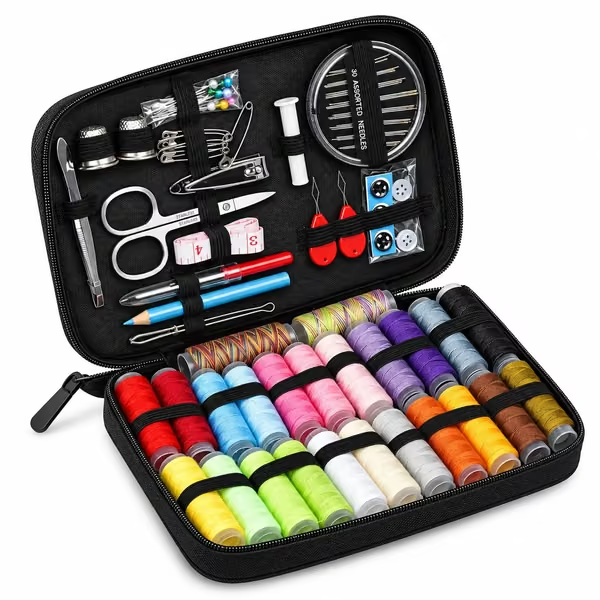
98-piece sewing kit with storage bag (opens on Amazon in a new tab)
Needles, thread, scissors and odds and ends in one zip case.
- One purchase covers hand-sewing basics
- Packs flat for travel or a drawer
Best for: Hand finishing, basting and quick repairs.
Check price for 98-piece sewing kit with storage bag (opens in a new tab)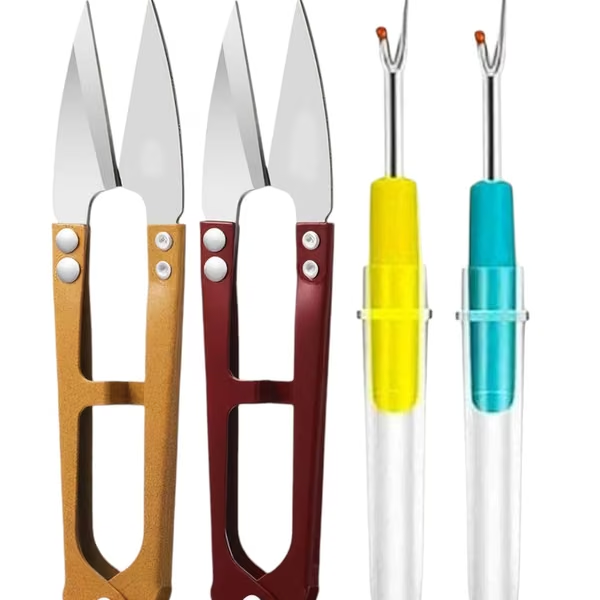
Sewing and stitching
Seam ripper and thread snip set, 4 pieces (opens on Amazon in a new tab)
Two rippers and two thread scissors for undoing stitches without tears.
- Different sizes for seams and buttonholes
- Cheap enough to keep in every kit
Best for: Fixing mistakes, opening buttonholes and removing old stitching.
Check price for Seam ripper and thread snip set, 4 pieces (opens in a new tab)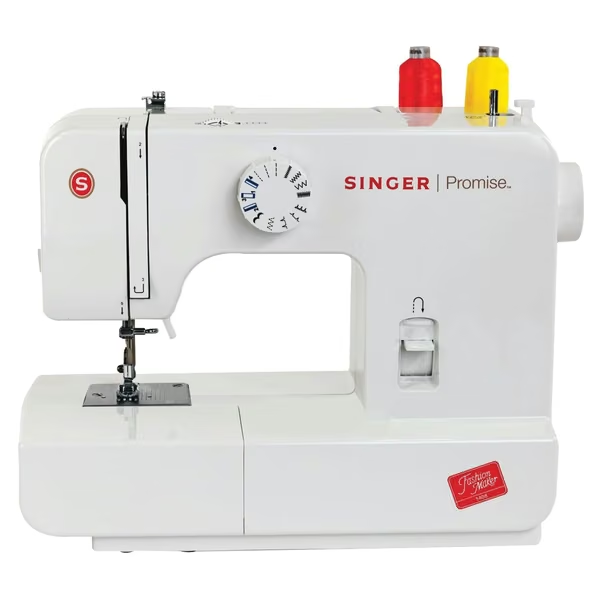
Sewing and stitching
SINGER 1408 sewing machine, 8 built-in stitches (opens on Amazon in a new tab)
A metal-framed machine with 21 stitch functions and a free arm.
- 800 stitches per minute for everyday seams
- 4-step buttonhole and snap-on presser foot
Best for: A first machine for dressmaking, alterations and home sewing.
Check price for SINGER 1408 sewing machine, 8 built-in stitches (opens in a new tab)Running stitch
The simplest stitch: the needle goes in and out of the fabric in a straight line, creating a dashed line of stitches. It is fast and light, which makes it ideal for gathering, basting and temporary seams.
When to use it: basting, gathering, quick seams that will be re-sewn by machine, and quilting.
How to keep it even: take several stitches onto the needle before pulling through, but keep the bites small and consistent. Long stitches pucker the fabric.
Backstitch
The strongest hand stitch. Each stitch goes back to meet the end of the previous one, creating a solid, continuous line. It looks like machine stitching from the right side.
When to use it: seams that need strength, repairing a torn seam, sewing leather or heavy fabric, and anywhere a machine cannot reach.
How to keep it even: keep the stitch length short and consistent. Short backstitches are strong; long ones gap and weaken.
Slip stitch (ladder stitch)
An invisible stitch used to join two folded edges or to close an opening. The needle picks up a tiny bite from one side, then the other, creating a ladder of thread that disappears when pulled tight.
When to use it: closing pillow covers, stuffed toys, linings, and finishing hems where the stitch must not show.
How to keep it even: take tiny bites, keep the tension gentle, and pull the thread only after every few stitches so the ladder stays flat.
Blanket stitch
A decorative edge stitch with a looped edge. The needle goes through the fabric and the thread loops around the needle before pulling tight, creating a neat, reinforced edge.
When to use it: finishing raw edges, applique, felt work, and decorative edges on blankets and tea towels.
How to keep it even: keep the stitch spacing and depth identical. A blanket stitch that changes depth looks messy; one that is even looks intentional.
Whip stitch
A quick overcasting stitch that wraps the thread around the edge of the fabric. It is fast and functional rather than beautiful.
When to use it: finishing raw edges quickly, hemming knits, closing seams on stuffed items, and temporary fixes.
How to keep it even: keep the spacing consistent and the tension light. Pulling too tight puckers the edge.
Catch stitch (herringbone)
A zigzag stitch that catches the hem to the garment without showing on the right side. It is flexible and allows the fabric to move, which makes it ideal for stretchy or heavy fabrics.
When to use it: hemming trousers, skirts and coats, especially in wool or jersey, and anywhere the hem needs to move with the fabric.
How to keep it even: keep the stitches small and the crosses shallow. The stitch should catch only a thread or two of the garment fabric.
Choosing the right stitch
| Job | Stitch | Why |
|---|---|---|
| Basting or gathering | Running stitch | Fast and easy to remove |
| Strong seam by hand | Backstitch | Continuous, durable line |
| Invisible closure | Slip stitch | Thread disappears into the fold |
| Decorative edge | Blanket stitch | Reinforced, visible loop |
| Quick edge finish | Whip stitch | Fast and functional |
| Flexible hem | Catch stitch | Moves with the fabric |
Practising effectively
Sew a row of each stitch on a scrap of the same fabric you will use for the garment, then compare. Check the back as well as the front — a stitch that looks neat on top but messy underneath will not hold.
- Start with running stitch and backstitch; they teach tension and spacing.
- Move to slip stitch once you can keep bites small and even.
- Practise blanket stitch on felt, which does not fray and shows the loops clearly.
- Use a thimble for heavy fabric; it protects the finger and lets you push the needle with control.
Next steps
Once your hand sewing is steady, read garment fitting problems and how to fix them, and essential tailoring tools for the needles, thread and marking tools that make hand work easier.
Frequently asked questions
Do I still need hand stitches if I have a sewing machine?
Yes. Machines are faster for long seams, but hand stitches are better for hems, closures, delicate fabrics and anywhere a machine cannot reach. Most garments use both.
What thread should I use for hand sewing?
Use thread that matches the fabric weight and fibre. Cotton thread for cotton, silk thread for silk, polyester for most synthetics. Match the colour to the fabric for invisible work, or contrast it for decorative stitches.
Why do my stitches look uneven?
Usually because the stitch length changes with each stitch. Mark a guide line with chalk and aim for the same length and spacing every time. Practice on scrap fabric before touching the garment.
How do I stop thread from tangling?
Use a thread length no longer than your forearm, wax it lightly, and let the needle dangle occasionally to untwist. Shorter thread is slower but far less frustrating.