Fabric Types for Sewing: A Beginner Guide to Choosing Cloth
Fabric is half the garment. The same pattern in cotton and in silk produces two different clothes, and a fabric that fights you at the machine will fight you at every stage. This guide explains the common cloth types by what they do, not just what they are called.
Fibre, weave and finish
Three things decide how a fabric behaves:
- Fibre — what the thread is made of: cotton, linen, silk, wool, or a synthetic such as polyester or nylon.
- Weave or knit — how the threads are put together. Woven cloth is stable; knit cloth stretches.
- Finish — treatments applied after weaving, such as mercerising, brushing or waterproofing, which change the surface and handle.
A fabric's name usually describes the fibre and the weave together: "cotton poplin" means cotton fibre in a poplin weave. Learning to read the name tells you most of what you need to know.
Cotton
The most forgiving fabric for beginners and the backbone of everyday clothing. Cotton breathes, presses well, takes dye beautifully and holds its shape while you cut and sew.
- Poplin and shirting: smooth, medium weight, ideal for shirts and dresses.
- Canvas and denim: heavy and durable, for trousers, bags and workwear.
- Voile and lawn: light and sheer, for summer blouses and linings.
- Flannel: brushed and soft, for shirts and winter wear.
Watch out for: shrinkage. Always pre-wash cotton, and expect it to crease.
Linen
Linen is strong, cool and absorbent, with a crisp hand that gives garments structure. It is excellent for hot climates and for tailored summer pieces.
Watch out for: it wrinkles badly and frays at the edges. Finish seams carefully and press while damp. It also shrinks, so pre-wash.
Silk
Silk has a unique combination of strength, drape and lustre. It moves beautifully and is comfortable against the skin, which is why it is used for blouses, dresses and linings.
- Chiffon: sheer and floaty, difficult to cut.
- Crepe de chine: matte, drapy, forgiving for beginners in silk.
- Satin: glossy and slippery, shows every stitch.
- Tussah or raw silk: textured and easier to handle.
Watch out for: silk slips while cutting, shows pin marks, and water can leave spots. Use sharp pins, a fresh needle and a pressing cloth.
Wool
Wool is warm, resilient and shapes beautifully under steam, which is why tailors love it. It can be moulded into curves in a way no other fibre allows.
- Wool suiting: smooth and firm, for trousers and jackets.
- Tweed: textured and warm, for coats and skirts.
- Wool crepe: drapy and soft, for dresses.
- Felted wool: dense and non-fraying, for coats and crafts.
Watch out for: moth damage in storage, and shrinkage from heat and agitation. Steam-press rather than iron.
Rayon and viscose
Rayon is a semi-synthetic made from plant cellulose. It drapes like silk, breathes like cotton, and costs far less than either. It is one of the most useful fabrics for dresses and blouses.
Watch out for: it shrinks badly, weakens when wet and wrinkles easily. Pre-wash, handle gently when damp, and expect to press often.
Synthetics: polyester, nylon, acrylic
Synthetic fibres are strong, cheap and easy to care for, but they do not breathe well and can look shiny or feel unpleasant against the skin.
- Polyester: durable and wrinkle-resistant; good for linings and easy-care garments.
- Nylon: strong and light; used for activewear and outerwear.
- Acrylic: wool-like and warm; used for knitwear.
- Blends: cotton-polyester mixes combine the comfort of cotton with the easy care of polyester.
Watch out for: melting under a hot iron, static cling, and poor breathability. Use a low iron setting and a pressing cloth.
Knits and stretch fabrics
Knits are made of interlocking loops rather than woven threads, which makes them stretchy and comfortable. They are the basis of t-shirts, leggings and jersey dresses.
- Jersey: single knit, stretches in one direction, curls at the edges.
- Interlock: double knit, stable and reversible.
- Rib knit: stretches across the width, used for cuffs and neckbands.
- Spandex or elastane blends: add stretch to woven fabrics.
Watch out for: knits stretch while you sew. Use a ballpoint needle, a stretch stitch or a narrow zigzag, and do not pull the fabric through the machine.
Weight, drape and structure
Beyond fibre, the weight and drape of a fabric decide what it is good for.
| Property | Lightweight | Medium weight | Heavyweight |
|---|---|---|---|
| Examples | Voile, chiffon, lawn | Poplin, crepe, jersey | Denim, canvas, wool coating |
| Best for | Blouses, linings, summer dresses | Shirts, dresses, trousers | Coats, jackets, bags |
| Handling | Slips and frays; needs care | Forgiving; good for beginners | Stable but bulky at seams |
Drape is how a fabric falls. A fabric with good drape flows over the body; a fabric with poor drape stands away from it. Match drape to the garment: a flowing dress needs drape, a structured jacket needs body.
Choosing fabric for a garment
- Start with the pattern. Most patterns suggest suitable fabrics. Follow them until you understand why.
- Consider the climate. Cotton and linen for heat; wool and synthetics for cold.
- Consider the care. A garment you cannot wash easily will not be worn often.
- Feel the fabric. Drape, weight and handle matter more than the name on the bolt.
- Buy a little extra. Fabric shrinks, and matching dye lots later is hard.
Grain and cutting
Woven fabric has a lengthwise grain (parallel to the selvedge), a crosswise grain (across it) and a bias (diagonal). Most patterns are cut on the lengthwise grain for stability. Cutting on the bias gives stretch and drape but distorts easily. Always align the pattern's grainline arrow with the fabric's grain before cutting.
Pattern making worth owning
Curves, rulers and sets for drafting flat patterns.
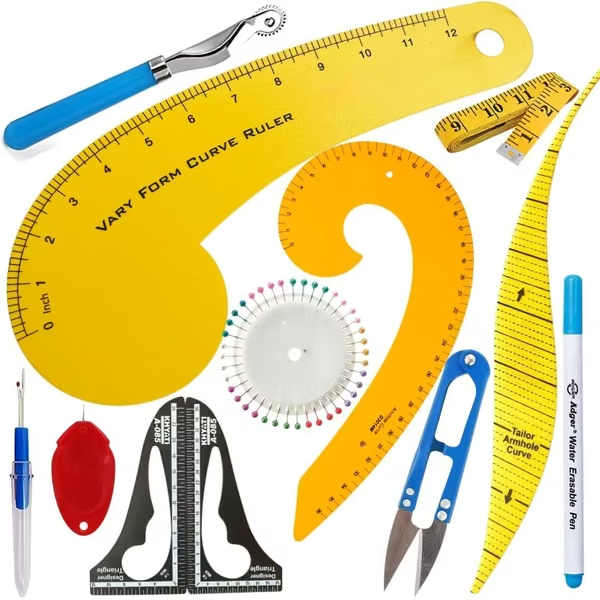
Pattern making
12-piece pattern-making and tailoring kit (opens on Amazon in a new tab)
French curve, armhole ruler and tape for drafting and adapting patterns.
- Curves cover armholes, necklines and hips
- Everything needed for a flat pattern in one box
Best for: Drafting blocks and adapting patterns to a body.
Check price for 12-piece pattern-making and tailoring kit (opens in a new tab)Next steps
Read what draping is to see how fabric behaves on a body, and essential tailoring tools for the shears, pins and marking tools that make cutting accurate. For fabric and pattern tools, see the recommended tools list.
Frequently asked questions
What is the easiest fabric for a beginner?
Medium-weight cotton. It is stable, presses well, does not slip while cutting, and forgives small mistakes. Avoid silk, satin and stretch knits for a first garment.
What does "grain" mean?
Grain is the direction of the threads in woven fabric. Lengthwise grain runs parallel to the selvedge and is the strongest; crosswise grain runs across it. Cutting on the wrong grain changes how a garment hangs.
How do I know if a fabric is woven or knit?
Woven fabric has threads running at right angles and does not stretch much. Knit fabric is made of loops and stretches in one or both directions. Look at the edge: woven has a finished selvedge; knit has a rolled or cut edge.
Should I pre-wash fabric before sewing?
Yes, almost always. Washing removes shrinkage, finishing chemicals and excess dye. Wash and dry the fabric the same way you will wash the finished garment.