What Is a Dress Form? A Complete Guide for Tailors and Fashion Designers
A dress form is a three-dimensional model of the human torso, mounted on a stand and used to hold a garment in shape while it is pinned, marked, draped and fitted. It is a working tool: the thing you build on, not the thing you display in a shop window.
What a dress form actually is
A dress form is built around an internal frame and covered with a fabric or foam surface that accepts pins. It sits on a stand at roughly the height of a person, so you can work standing up with the garment in front of you instead of flat on a table.
The important part is not the shape of the shoulders. It is that the form gives you a fixed, repeatable body. A live client shifts their weight, breathes, gets tired and cannot hold a hem line for twenty minutes. A form does none of that, which is why so much of the thinking in tailoring happens on one.
Why tailors and designers use them
Three practical reasons come up again and again:
- You can see the whole garment at once. Flat pattern pieces hide problems that are obvious in three dimensions, especially around the bust, shoulder and hip.
- You can work without the wearer present. Most of a garment is built between fittings. The form holds the shape while you do it.
- The reference is repeatable. If a sleeve sits correctly today, it will sit the same way tomorrow, so corrections actually accumulate instead of getting lost.
Dress form or display mannequin?
A display mannequin is a retail fixture. It is usually a hard, glossy shell in a fixed pose, designed to look good in a window and to be dressed from the outside. Pins are not welcome, and the body underneath is stylised rather than measured.
A working dress form is the opposite: a fabric-covered, pinnable surface whose measurements are published and checked. It exists to be marked, pinned and occasionally stabbed. If you are choosing between the two, the full comparison goes through construction, cost and use cases.
How tailors use a dress form
A tailor typically uses the form for four jobs:
- First fitting and basting. The garment is pinned together on the form to check balance before any permanent stitching.
- Setting sleeves and collars. These are the parts where a few millimetres of easing decide whether the garment hangs cleanly.
- Marking hems and darts. Hems still need the wearer's shoes and posture for a final check, but the form gives a reliable starting line.
- Pressing. A shaped pressing surface makes it far easier to press curves into shape instead of flattening them.
How fashion designers use a dress form
Designers lean on the form earlier in the process. Draping — shaping fabric directly on the body instead of drafting a flat pattern first — happens on a dress form by definition. It lets a designer see how a fabric falls before committing to a pattern, and it is how a lot of original shapes are found.
Designers also use forms to keep a collection consistent: if every piece is developed on the same body, proportion stays coherent across the range. If you want to try it, the beginner’s guide to draping covers the workflow.
The main types, briefly
| Type | Shape | Typical use |
|---|---|---|
| Full body form | Shoulders to below the hip, on a stand | Dresses, coats, full-length garments |
| Half body form | Torso ending at the hip (tailor’s dummy) | Blouses, shirts, jackets, fitting work |
| Torso form | Bust to waist, often with a shorter stand | Close fitting tops, lingerie, draping detail |
| Adjustable form | Panels that expand or contract | Sewing for several body shapes |
| Professional / spec form | Fixed, precise measurements, robust build | Pattern rooms, production sampling |
The types of dress forms guide explains the trade-offs, including why adjustable forms are convenient but not a substitute for a well-sized fixed form.
What a dress form genuinely improves
- Fit problems surface earlier, when they are cheap to fix.
- Draping and pinning become possible at all.
- Garment balance — front to back, shoulder to hem — becomes visible.
- Pressing curves and shaping seams gets easier.
- Photographing progress for a client or a portfolio becomes simple.
What it cannot do
A dress form is an approximation, and it is worth being honest about the gaps. It has no posture, no movement and no asymmetry. Real bodies slope, rotate and carry weight differently on each side. A garment that hangs perfectly on a form can still ride up when the wearer lifts their arms.
It also cannot tell you how a fabric feels, whether a waistband digs in, or whether the wearer likes the result. Treat the form as a way to remove construction problems before the fitting, not as a verdict on fit.
How to choose one
Start with the job, not the price. If you make dresses and drape, you need a full body form. If you alter shirts and jackets, a half body form is easier to work around. If you sew for a family with different measurements, an adjustable form is the pragmatic choice; if you sew professionally for one size range, buy a fixed form in that size and treat it as equipment.
Two checks before you buy: measure the form yourself with a soft tape, and confirm the cover accepts pins easily. The buying guide turns this into a checklist.
Measuring tools worth owning
Tapes and rules that decide whether a garment fits at all.
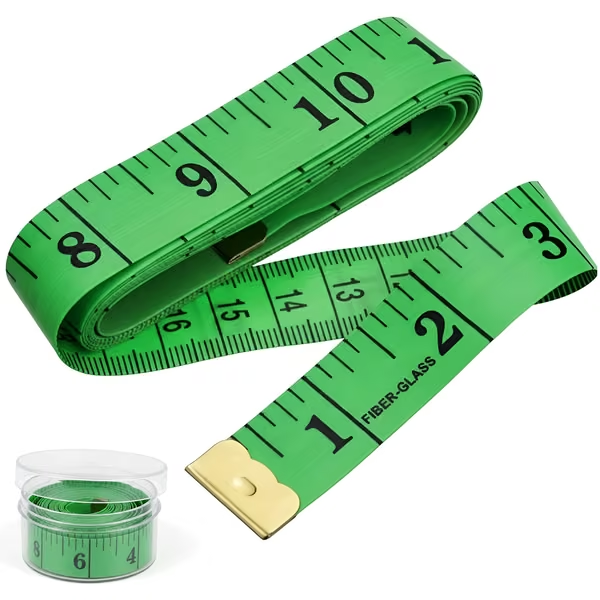
Measuring tools
Soft measuring tape, 150 cm (opens on Amazon in a new tab)
A flexible dual-scale tape that follows body curves, not straight lines.
- Centimetres on one side, inches on the other
- Flexible enough for bust, waist and hip
Best for: Taking body and dress form measurements accurately.
Check price for Soft measuring tape, 150 cm (opens in a new tab)Where to go next
If you are setting up a workroom, read how to measure a dress form before your first fitting. If you are still deciding what to buy, the choosing guide and our dress form range are the practical next steps.
Frequently asked questions
Is a dress form the same as a mannequin?
Not in a workroom. A dress form is a pinnable, measurement-based torso used to build and fit garments. A display mannequin is a finished retail fixture, usually glossy and not designed to take pins. The two are often confused because both look like a body.
Can a dress form replace a real fitting?
No. A form cannot walk, sit, raise an arm or tell you a collar feels tight. It is a stand-in that lets you solve most construction problems before the wearer arrives, which reduces the number of live fittings but never removes the final one.
What size dress form should a beginner buy?
Buy the size you sew most often, and check its published bust, waist and hip measurements against your own tape rather than trusting the label. If you sew for several people, an adjustable form covers more ground; if you sew for one person, match their measurements.
Can you sew directly on a dress form?
You can pin, baste and mark on it, and many tailors do. Machine stitching while the garment is on the form is awkward and can distort the shape. Take the piece off, sew, then put it back on to check.