सिलाई के लिए कपड़े के प्रकार - Fabric Types Hindi
कपड़ा garment का आधा भाग है। same pattern में cotton और silk दोनों में कपड़ा बदलने पर two different clothes बनते हैं, और वह fabric जिसे आप machine में कठिनाई महसूस होती है, उसे हर चरण में कठिनाई होगी।
फ़ाइबर, बुनाई और finish
तीन चीजें निर्धारित करती हैं कि एक कपड़ा कैसे व्यवहार करता है:
- फ़ाइबर — क्या thread से बनाया गया है: कपास, लिनन, रेशम, ऊन, या polyester या nylon जैसे सिंथेटिक।
- बुनाई या knit — how the threads are put together. Woven cloth stable है; knit cloth stretch करती है।
- Finish — treatments applied after weaving, such as mercerising, brushing या waterproofing, which change the surface और handle।
एक कपड़े का नाम usual रूप से fibre और weave साथ describe करती है: "cotton poplin" का अर्थ है cotton fibre में poplin weave। नाम पढ़ना सीखना आपको बताता है कि आपको ज्यादातर क्या जानने की आवश्यकता है।
कपास
सबसे forgiving fabric for beginners और everyday clothing की रीढ़। कपास breathes, presses well, takes dye beautifully and holds its shape while you cut and sew.
- Poplin and shirting: smooth, medium weight, ideal for shirts and dresses.
- Canvas and denim: heavy and durable, for trousers, bags and workwear.
- Voile and lawn: light and sheer, for summer blouses and linings.
- Flannel: brushed and soft, for shirts and winter wear.
Watch out for: shrinkage. Always pre-wash cotton, and expect it to crease.
लिनन
लिनन strong, cool और absorbent है, हैंड crisp देता है garment संरचना देता है। यह गर्म जलवायु और tailored summer pieces के लिये उत्कृष्ट है。
Watch out for: यह badly wrinkles और edges पर fray होती है। seams finish carefully और damp while press करें। यह भी shrink होती है, इसलिए pre-wash करें。
रेस्म
रेस्म की unique combination of strength, drape औरlustre है। यह superbly moves और skin के खिलाफ comfortable है, which is why it is used for blouses, dresses और linings.
- Chiffon: sheer और floaty, difficult to cut.
- Crepe de chine: matte, drapy, forgiving for beginners in silk.
- Satin: glossy और slippery, shows every stitch.
- Tussah or raw silk: textured और easier to handle.
Watch out for: silk slips while cutting, shows pin marks, and water can leave spots. Use sharp pins, a fresh needle and a pressing cloth.
ऊन
ऊन warm, resilient और resilient और steam के under beautifully shapes, which is why tailors love it. It can be moulded into curves in a way no other fibre allows.
- Wool suiting: smooth and firm, for trousers and jackets.
- Tweed: textured और warm, for coats और skirts.
- Wool crepe: drapy और soft, for dresses.
- Felted wool: dense और non-fraying, for coats और crafts.
Watch out for: moth damage in storage, and shrinkage from heat and agitation. Steam-press rather than iron.
रेयॉन और viscose
रेयॉन semi-synthetic made from plant cellulose। यह silk की तरह drape करती है, cotton की तरह breathes और costs far less than either। it is one of the most useful fabrics for dresses और blouses.
Watch out for: it shrinks badly, weakens when wet और easily wrinkles। pre-wash, handle gently when damp, और expect to press often。
सिंथेटिक: पॉलिस्टर, nylon, एक्रिलिक
सिंथेटिक fibre strong, cheap और easy to care for करते हैं, लेकिन breath नहीं करती और skin के खिलाफ असहोष्ण महसूस हो सकती है。
- पॉलिस्टर: durable और wrinkle-resistant; good for linings और easy-care garments.
- नायलॉन: strong और light; used for activewear और outerwear.
- एक्रिलिक: wool-like और warm; used for knitwear.
- मिश्रण: cotton-polyester mixes combine the comfort of cotton with the easy care of polyester.
Watch out for: melting under a hot iron, static cling, और poor breathability। low iron setting और pressing cloth use करें。
बुना हुआ कपड़ा और stretch fabric
Knits made of interlocking loops rather than woven threads, which makes them stretchy और comfortable। टी-शर्ट, leggings और jersey dresses का आधार यही होती है。
- Jersey: single knit, एक दिशा में stretch होती, edges curl होती है。
- Interlock: double knit, stable और reversible。
- Rib knit: stretches across the width, used for cuffs और neckbands.
- Spandex or elastane blends: add stretch to woven fabrics.
Watch out for: knits stretch while you sew। ballpoint needle, stretch stitch या narrow zigzag use करें, और fabric को machine through pull न करें।
वजन, drape और structure
Beyond fibre, the weight और drape of a fabric decide what it is good for.
| प्रॉपर्टी | Lightweight | Medium weight | Heavyweight |
|---|---|---|---|
| Examples | Voile, chiffon, lawn | Poplin, crepe, jersey | Denim, canvas, wool coating |
| Best for | Blouses, linings, summer dresses | Shirts, dresses, trousers | Coats, jackets, bags |
| Handling | Slips and frays; needs care | Forgiving; good for beginners | Stable but bulky at seams |
Drape is how a fabric falls। एक कपड़े में good drape flows over the body; poor drape इसे away stand करती है। Match drape to the garment: flowing dress needs drape, structured jacket needs body。
कपड़ा चुनना
- पैटर्न के साथ शुरू करें. Most patterns suggest suitable fabrics। follow करें तब तक जब तक आप समझ न जाएँ कि क्यों।
- क्लिमेट पर विचार करें. गर्म के लिये कपास और लिनन; ठंड के लिये ऊन और सिंथेटिक।
- डीकेयर पर विचार करें. एक garment जिसे आसानी से wash नहीं किया जा सकता, उसे अक्सर नहीं पहना जाएगा।
- कपड़े का feel करें. drape, weight और handle नाम से ज्यादा मायने रखता है।
- थोड़ा extra कपड़ा खरीदें. Fabric shrink होता है, और matching dye lots later hard है।
ग्रेन और cutting
Woven fabric में lengthwise grain (selvedge parallel), crosswise grain (across it) और bias (diagonal) होते हैं। Most patterns cutting stability के लिये lengthwise grain पर cut किए जाते हैं। Bias पर cutting stretch और drape देती है pero easily distorts। Always pattern के grainline arrow को fabric के grain के साथ align करें before cutting。
Pattern making worth owning
Curves, rulers and sets for drafting flat patterns.
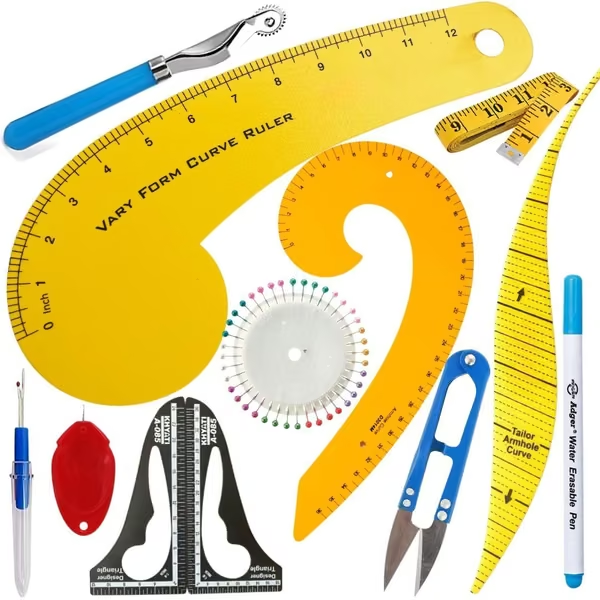
Pattern making
12-piece pattern-making and tailoring kit (opens on Amazon in a new tab)
French curve, armhole ruler and tape for drafting and adapting patterns.
- Curves cover armholes, necklines and hips
- Everything needed for a flat pattern in one box
Best for: Drafting blocks and adapting patterns to a body.
Check price for 12-piece pattern-making and tailoring kit (opens in a new tab)आगे के कदम
ड्रापिंग क्या है पढ़ें ताकि शरीर पर कपड़ा कैसे व्यवहार करता देख सकें, और essential tailoring tools लिए shears, pins और marking tools जो cutting accurate बनाते हैं। कपड़े और pattern tools के लिए, recommended tools list देखें।
Frequently asked questions
एक beginner के लिए सबसे आसान कपड़ा कौन सा है?
मध्यम-वजन cotton। यह stable है, अच्छी तरह press होता है, cutting के दौरान slip नहीं होता, और छोटी गलतियों को माफ करता है। silk, satin और stretch knits first garment के लिये avoid करें।
"ग्रेन" का क्या अर्थ है?
ग्रेन woven fabric में threads की direction है। Lengthwise grain selvedge parallel run करती है और strongest होती है; crosswise grain इसे cross करती है। गलत grain पर cutting garment के hang करने का तरीका बदल देती है।
मैं कैसे जानूं कि कपड़ा woven है या knit?
Woven fabric में threads right angles पर होते हैं और ज्यादा stretch नहीं होता। Knit fabric loops से बनाया गया है और एक या दोनों दिशाओं में stretch होती है। किनारे देखकर: woven का finished selvedge होता है; knit का rolled या cut edge होता है।
कपड़ा धोने से पहले प्री-वाश करना चाहिए?
नहीं, लगभग हमेशा। shrinkage हटाता है, finishing chemicals और excess dye। कपड़े को वही तरीका धोएं और सुखाएं जिससे finished garment धोया जाएगा।